
Find ISL Products Online at 


Design Note
Advantages of Non Magnetic Audio Components
Discover Why Leading Engineers Swap Traditional Magnetic Speakers for Lightweight, EMI-Immune Non-Magnetic Audio Solutions
Innovative, Lightweight, and EMI-Immune Non-Magnetic Audio Solutions
While traditional dynamic loudspeakers—which rely on massive permanent magnets interacting with copper voice coils to generate mechanical motion—are powerful and highly efficient in standard applications, their intense magnetic properties pose significant drawbacks for specialized electronics. Enter the world of non-magnetic audio components.
As modern electronic devices become more elaborate, increasingly compact, and highly sensitive to their surrounding environments, engineers and product designers are actively seeking alternatives to conventional loudspeakers. For medical, military, and portable applications, non-magnetic audio technology provides superior results, enhanced durability, and unprecedented environmental adaptability.
What Are Non-Magnetic Speakers?
Non-magnetic speakers, commonly referred to in the engineering world as piezo loudspeakers or simply “piezos,” represent a highly versatile and crucial subset of the audio component market. While they are most frequently found soldered directly to printed circuit boards (PCBs) inside a vast array of consumer electronics—from microwaves to computer motherboards—this represents only a small fraction of their total commercial utility.
Because they completely ditch the permanent magnet and heavy copper coils found in traditional speakers, piezo components offer unique electrical, physical, and acoustic characteristics. This makes them indispensable for specific industrial, medical, and commercial applications where standard magnetic interference would be catastrophic.
The Science: How Do Piezoelectric Audio Devices Work?
To understand the advantages of non-magnetic speakers, one must understand the piezoelectric effect. Piezoelectrics rely on a specialized group of minerals, ceramics, and compounds featuring asymmetrically arranged atoms. Most standard elements feature rigid, solid, and uniformly repeating atomic structures. Piezoelectric materials break this mold.
At rest, the asymmetrical arrangements of these atoms exist in a neutral balance. However, when the physical structure is deformed by an external mechanical force, the atoms shift, creating a measurable electrical potential.
Crucially for audio applications, this process operates perfectly in reverse. If you apply an electrical voltage to the material, you can force the ceramic compound to mechanically deform on command. By applying a continuous analog electrical audio signal, the piezoelectric audio element will rapidly oscillate, accurately reproducing that electrical signal as an audible acoustic sound wave.
Today, advanced piezoelectrics are capable of delivering Sound Pressure Levels (SPL) comparable to traditional speakers across similar frequency ranges. Engineers can utilize specific resonance frequency responses, integrating piezo tweeters for crisp, high-frequency output and specialized piezo woofers for deeper frequencies to maximize overall sound quality and pressure.
Key Benefits and Industry Applications
The unique architecture of non-magnetic audio components unlocks a myriad of benefits across highly demanding industries.
MRI (Magnetic Resonance Imaging) and Medical Suites
MRI machines produce massive, high-intensity magnetic fields with immense electromagnetic force (often exceeding 1.5 to 3 Tesla). This environment renders standard dynamic loudspeakers completely useless; the magnetic forces would physically pull a traditional speaker apart or turn it into a dangerous projectile. Furthermore, conventional magnetic speakers actively interfere with the MRI’s delicate readings, completely ruining the medical imagery.
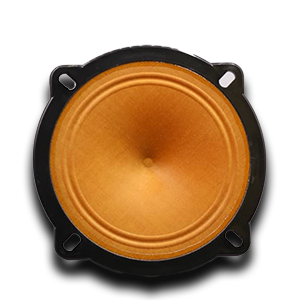
Yet, two-way intercom communication and patient music systems are vital in MRI suites, where claustrophobic patients may be subjected to scans lasting up to 90 minutes. MRI speakers, constructed entirely of non-magnetic piezoelectric materials, are the definitive solution. They transmit a full, rich range of sound with strong intensity while remaining totally unaffected by the immense magnetic forces in the room. More importantly, they have zero electromagnetic footprint, ensuring perfect scan clarity.
Ultra-Lightweight and Compact Footprints
A heavily desired advantage of non-magnetic speakers is their incredibly low weight. Most traditional magnetic loudspeakers require a heavy stamped metal frame, dense copper coil windings, and a sizable, weighty permanent magnet to produce sound. All three of these components make incorporating a speaker into a lightweight, portable application a massive engineering challenge.
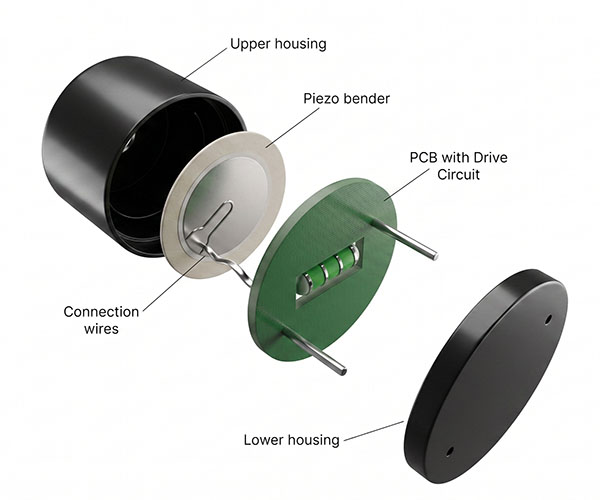
Piezo buzzers, transducers, and loudspeakers, on the other hand, typically consist of nothing more than a lightweight plastic housing, a microscopic quartz audio film, and minimal wiring. For portable IoT devices, wearables, and handheld medical tools, piezo transducers can even be engineered to use the device’s own outer chassis to resonate sound, eliminating the need for a bulky internal speaker cone altogether.
Unmatched Electrical Efficiency
Piezoelectric audio components draw incredibly low electric current, making them the absolute optimal choice for battery-powered systems where energy conservation is paramount. Their overall electrical impact on a circuit is significantly less than that of a magnetic speaker.
Furthermore, piezos are mathematically the most efficient method for producing high-frequency sounds. While traditional tweeters struggle with efficiency at the top of the spectrum, piezo components excel at emitting ear-piercing audio bands. Because of this, they are the undisputed industry standard for sirens, smoke detectors, carbon monoxide alarms, and smart locks in the safety and security sectors.
Extreme Durability in Harsh Environments
When deployed in the field, piezo speakers generally outlast their magnetic counterparts by a significant margin. They utilize advanced phenolic cones that resist the tearing, rotting, or dissolving that plagues paper-based speaker cones over time.
Additionally, these components are completely indifferent to humidity and moisture. Because there is a total absence of magnetic metal material, the risk of internal rust and corrosion is virtually zero. Because they are highly robust—and practically immune to being over-driven and burning out like a standard voice coil—piezo speakers are frequently utilized in rugged military vehicles, aerospace applications, and heavy-duty industrial equipment. In fact, specialized military piezo speakers have been shown to survive the concussive force of nearby explosions without rupturing.
Source Custom Piezo Audio Components with ISL Products
Whether you are designing a life-saving medical device, a rugged military communication system, or a highly efficient battery-powered IoT product, utilizing the right audio component is essential for your product’s success.
ISL Products has been designing, engineering, and manufacturing value-added electronic components like piezo speakers, buzzers, and transducers for over 45 years. We do not just supply off-the-shelf parts; we work alongside your engineering team to tailor components to your exact physical and electrical specifications.
